Choosing to Reach Anyway

A quiet love letter to healing, legacy, and Deep Space Nine
There are many unforgettable episodes throughout Trek. There are episodes that entertain, episodes that challenge, and episodes that stay with us long after the credits roll. This one did something else.
Episode 5 of Starfleet Academy did not just resonate with me. It changed me. Maybe it even healed something I did not realize I was still carrying.
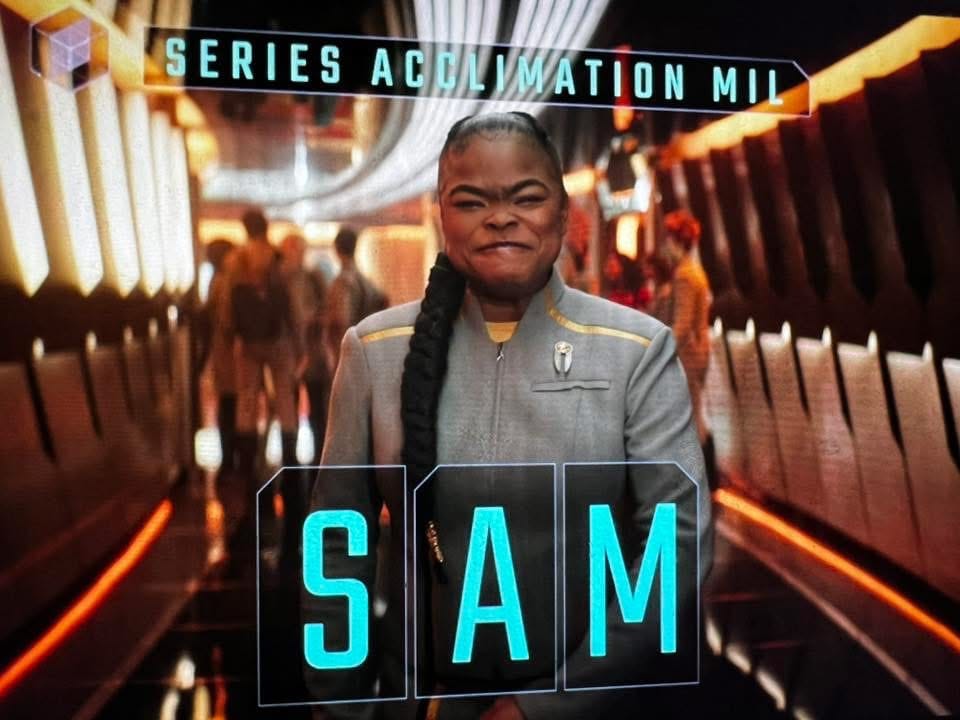
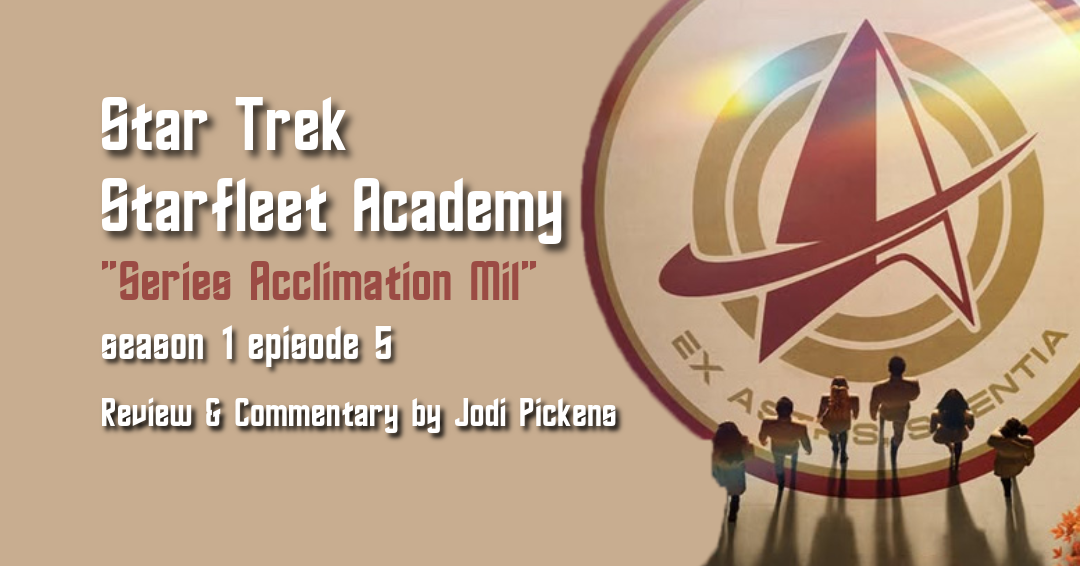
Season 1, Episode 5, “Series Acclimation Mil,” is a SAM episode on the surface. Underneath, it is about relationships. More specifically, it is about what happens when healing does not arrive all at once, or evenly, or neatly.
SAM does everything with unabashed energy. She narrates herself like a living log entry, full of curiosity and momentum. She is barely 200 days old, a photonic being from Kasq, and already she carries the weight of being an emissary. She studies organics not out of idle interest, but because her entire world is watching, judging, deciding whether connection is worth the risk. Kasq is not just waiting for data. They are waiting for permission to believe that connection will not destroy them.
What makes this episode special is that SAM does not find confidence by mastering data. She finds it through connection.
The hot pink overlays at the start of the episode matter more than they first appear. SAM’s handwriting is messy, playful, almost childlike. It visually reinforces how young she is, how new she is to the world, and how much of her learning is still emotional rather than intellectual. This is an episode about learning and accepting, and SAM is learning what it means to stand inside uncertainty without shutting down.
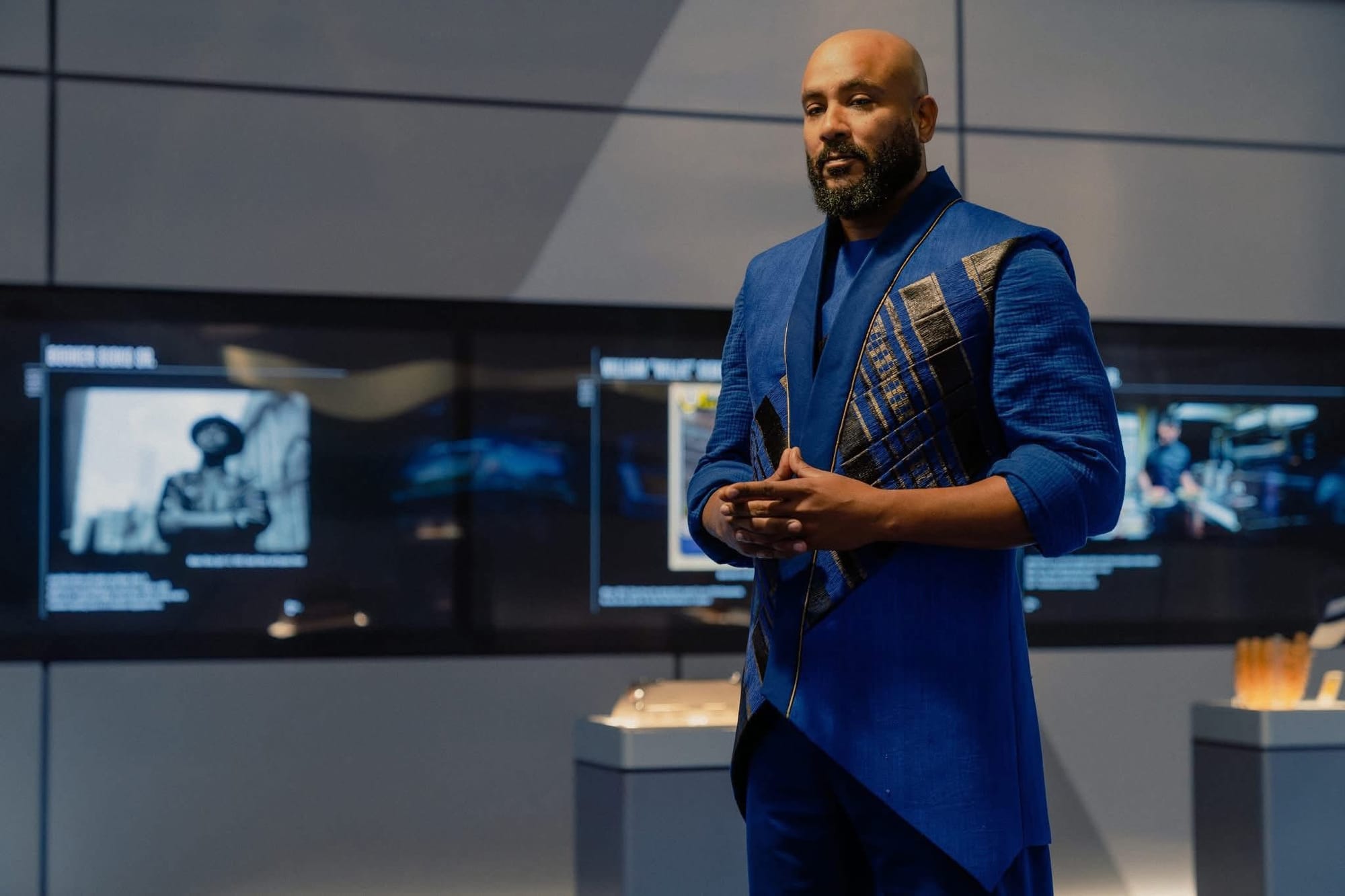
And then the episode does something I was not prepared for. There is Jake.
For longtime fans of Deep Space Nine, the loss of Benjamin Sisko was never just about him. It was about what he left behind, especially his son. Seeing Jake again, not frozen in grief but living, grounded, healed, was quietly monumental. I did not realize how much I needed that until it happened.
When SAM imagines her conversation with Jake, and he speaks with the same warmth and clarity his father once did, something clicks. Jake did not just survive. He healed. He thrived. He became his father in the way that matters most, in how he shows up for others. As a viewer, that mattered deeply. It felt like a promise finally kept.
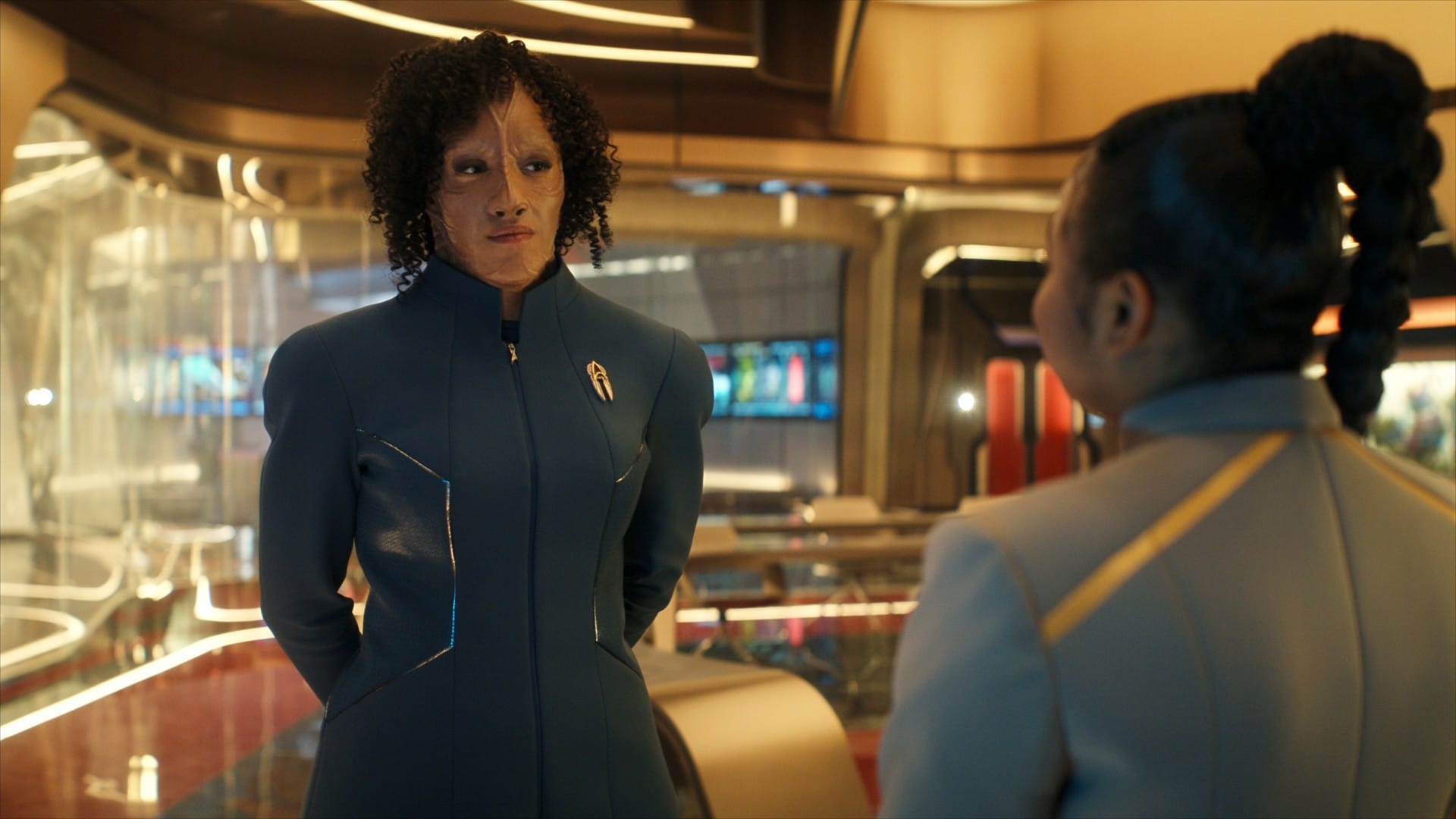
And then there is Professor Illa.
The reveal that Illa is Dax lands like a soft emotional detonation.
The Dax lives.
Which means Jadzia lives.
Ezri lives.
Every memory, every relationship, every lesson from Deep Space Nine still exists somewhere, carried forward. This is not nostalgia for nostalgia’s sake. It is continuity as comfort. Proof that nothing meaningful in Star Trek is ever truly erased. It changes. It evolves. It endures. Dax has always embodied that truth, and here, she becomes its quiet guardian.
All around SAM, relationships are strained and searching for bridges. We see it in SAM and her creators, who love her but fear what connection might cost. We see it in Jay-Den and Kyle, Caleb and Tarima, Ake and Kelrec, all circling trust from different directions.
But the relationship that sneaks up and wrecks you is SAM and The Doctor.
Because surprise, he is photonic too.
SAM is basically a toddler. A delightful, chaotic, neon-pink doodle toddler who thinks the Orb is an interdimensional combadge and who can take twelve simulated shots in five seconds and then ask why everyone is squiggly. Icon behavior. No notes.
The Doctor, meanwhile, has lived for over 800 years.
Eight. Hundred.
That is not just older. That is everyone you ever loved is a ghost older.
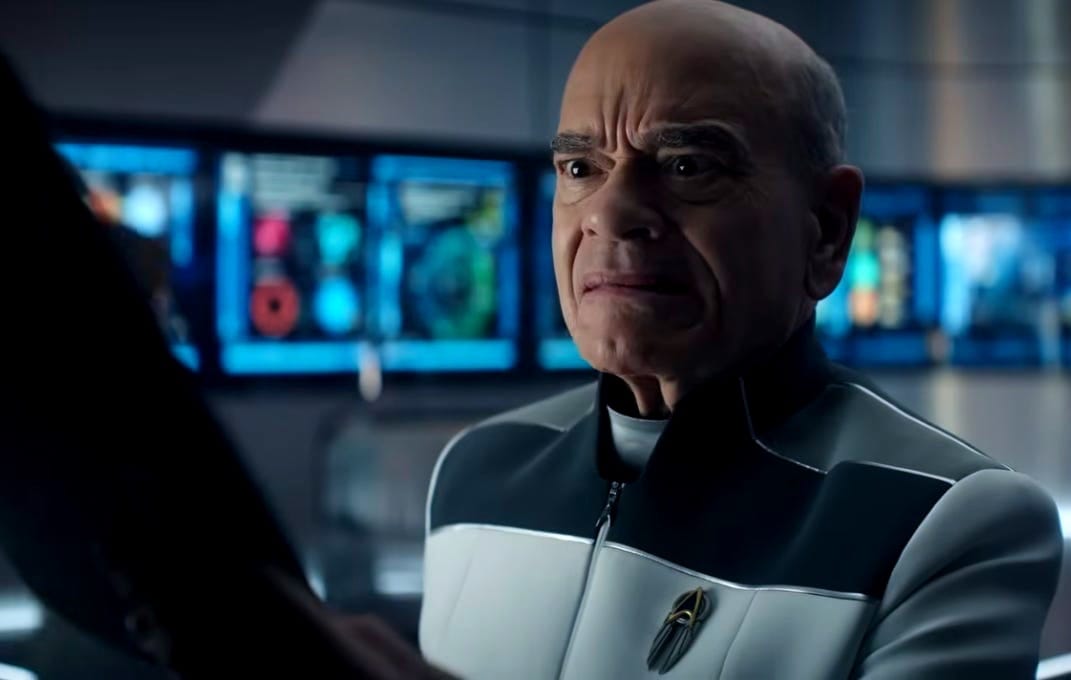
So when SAM asks him how Jake got over losing his father and The Doctor snaps, “You move on,” it does not land like wisdom. It lands like a defense mechanism that has had centuries to harden. If you have spent 800 years building relationships with organics and then watching every single one of them end, “you move on” stops being advice and starts being how you stay functional.
Here is where it hit me hardest. The Doctor we knew on Voyager learned how to love organics. He learned friendship, humor, tenderness. He fought to be seen as a person and then kept going, kept reaching, kept becoming more fully himself because of the people around him. The Doctor we see now feels like someone time has sanded down. Not because the show forgot who he is, but because time can do that. Time can turn warmth into caution. It can make connection feel less like home and more like a countdown.
And SAM does not let him get away with the shutdown. She hears what is underneath it. She is the only one in the room who seems to recognize that moving on is not the same thing as healing. That it might just be grief with good posture.
This scene matters because it is not just a legacy character moment. It is two photonic beings looking at the same problem from opposite ends of a timeline.
SAM is learning to reach.
The Doctor is someone who may have stopped.
SAM might not only be learning from the Doctor. She might be showing him the part of himself he lost.
The episode refuses to solve Benjamin Sisko like a puzzle. SAM wants certainty. She wants proof. She wants to know where he went. What she learns instead is that being chosen costs something, and that cost is rarely evenly distributed. Benjamin Sisko the Emissary and Benjamin Sisko the father were never separate. He did not vanish into destiny by accident. He chose, and he found a way to be himself inside that choice.
That realization is what allows SAM to finally speak to Kasq with honesty. You cannot understand organics by algorithm. Their purpose is not understanding. Their purpose is becoming. SAM chooses connection over certainty. Growth over obedience. Hands hovering in the air, shaping sound instead of answers.
When Avery Brooks’ voice comes in at the end, followed by that thank you, and then the Deep Space Nine theme rolls over the end credits, it does not feel like fan service. It feels like gratitude. It also feels intentional, written with care by Tawny Newsome and Kirsten Beyer, who clearly understood what this story needed to hold.
This episode is a love letter to DS9, yes. But more than that, it is a meditation on healing. On legacy. On the quiet bravery it takes to keep reaching out when loss has taught you how much it hurts.

“Series Acclimation Mil” belongs to SAM. It belongs to Jake. It belongs to Dax. And, in a quieter way, it belongs to The Doctor, a photonic being still carrying the weight of everything he has lost.
This episode changed me in a way I did not expect, because it reminded me that becoming is never finished, and that choosing to reach still counts, even when it hurts.
And I think that is one of the highest compliments Star Trek can ever earn.