Giving Starfleet Academy Its Flowers

Every once in a while, an episode of television comes along that does more than entertain.
It stays with you.
It stirs something in you.
It reminds you why stories matter in the first place and why Star Trek has meant so much to so many of us for so long.
For me, Starfleet Academy‘s “300th Night” is one of those episodes.
This one hit me deeply.
There are episodes across Star Trek that live in our hearts forever. The ones we come back to. The ones we talk about years later. Not just because they were exciting or clever or packed with lore, though we love that too. They stay with us because they touch something real. They say something true about grief, love, loss, healing, and what it means to keep going after life has changed you.
This is one of those episodes.
What makes it so powerful is how much it holds at once. It is funny, heartfelt, intense, and full of action, while never losing sight of its emotional core. It builds on everything this season has been doing with its characters and its larger mystery, and it does so with real care.
We begin in celebration. The cadets are on their way to Betazed for the dedication of the new seat of the Federation government. There is joy in the air. Relief too. For the first time in a while, it feels like maybe these young people and their leaders are starting to find their footing again.
That matters, because this season has asked so much of them.
Miyazaki changed them.
Loss changed them.
What they survived together changed them.
What this episode understands so well is that healing is not about becoming who you were before the trauma. It is about figuring out who you are now and learning how to carry what happened without letting it take everything from you.
That idea runs through the whole hour.
The Klingon bonding ritual is one of the clearest examples. Jay-Den inviting the others into the House of Kraag is not just a lovely cultural moment. It is intimate and deeply personal. It is about belonging. It is about chosen family. It is about people looking at each other and saying, in their own way, you matter to me, and you do not have to carry this alone.
That really got me.
In a season shaped so heavily by trauma, this moment felt like a soft place to land. It felt like what Star Trek so often does best. It does not pretend pain is not there. It shows us that connection can help us survive it.
And because this episode is emotionally honest, it lets even that warmth be complicated.
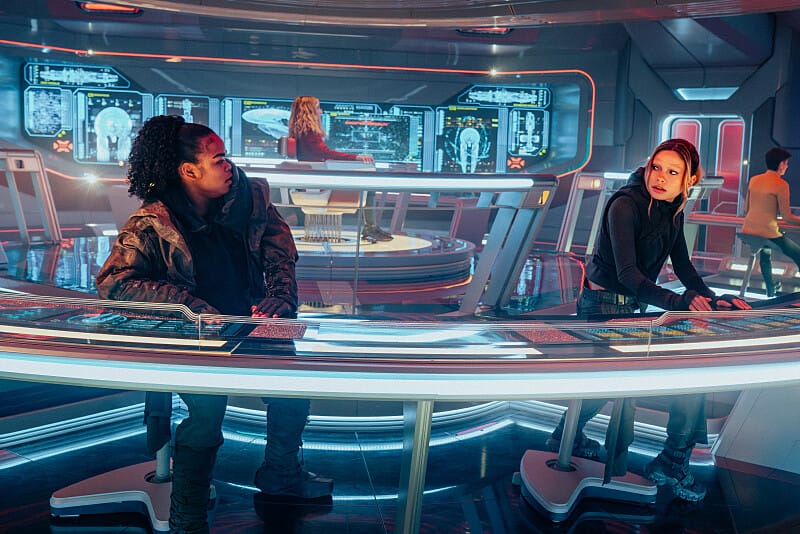
SAM telling Genesis that she asked for a single room next year is such a quiet heartbreak. Not because love is gone, but because change is happening. SAM is trying to understand herself in the wake of everything she has been through.
That felt very real to me.
Sometimes we come through something difficult and realize we are not who we were before. Sometimes we need space not because we love people less, but because we are trying to hear our own voice again. This episode lets that be tender and painful at the same time.

Then there is Caleb.
Oh, Caleb.
This episode gives him some of its strongest material, and it lands because it is handled with such tenderness. When the bonding ritual stirs up memories of his mother and he cannot go through with it, you feel the weight of that old wound immediately. Some absences do not stop shaping us just because time has passed.
That ache runs through everything that follows.
Even the scenes with Tarima carry it. There is love there. There is pain there. There is so much unsaid between them, and that is exactly why it works. Then later, when Caleb tells her that her name sounds like music and that she is music to him, it is one of those simple lines that says everything.
The moment that broke me most, though, was when Caleb finally found his mother’s messages.
What makes that reveal so beautiful is how personal it is. The answer is not some impossible code. The key is a childhood memory. A moon name. Ishaani. Something six-year-old Caleb would remember because his mother made sure he would.
That is such lovely writing because it makes the breakthrough feel intimate, not convenient.
It is not technology that unlocks the truth.
It is love.
It is memory.
It is a mother trying to leave her son a way back to her.
And when those messages flood in, it is devastating. The missed birthdays. The updates. The constant trying. The hope she never let go of. Caleb has to face the truth that she did not stop loving him. She did not abandon him in her heart. She was trying to reach him all along.
That is the kind of moment that stays with you.
It also belongs in that long tradition of Star Trek stories that understand how loss keeps living inside a person. This franchise has always known how to tell stories where pain leaves marks, and this episode absolutely belongs in that conversation.
That personal ache is also what makes the larger threat land even harder. While Caleb is finally learning how hard his mother fought to reach him, Braka is out there building weapons designed to cut whole worlds off from one another.
That is what makes the Omega-47 reveal so effective.
The threat is no longer abstract. The idea that Braka can deliberately shatter space and subspace, isolate worlds, and create barriers that could last for millions of years is terrifying. It raises the stakes in a way that feels massive, but it also fits the emotional themes of the episode.
This is a story about separation.
About isolation.
About people being cut off from one another.
Caleb from his mother.
People from the versions of themselves they used to be.
Cadets trying to find one another again after trauma.
And now the Federation itself facing the possibility of being boxed in.
What I especially admire is that even with those galaxy-sized stakes, the episode never loses the heart of Caleb’s story. At the center of all of this is still a son who wants his mother. That is what sends him running. Not heroics. Not glory. Love.
And of course he does not go alone.
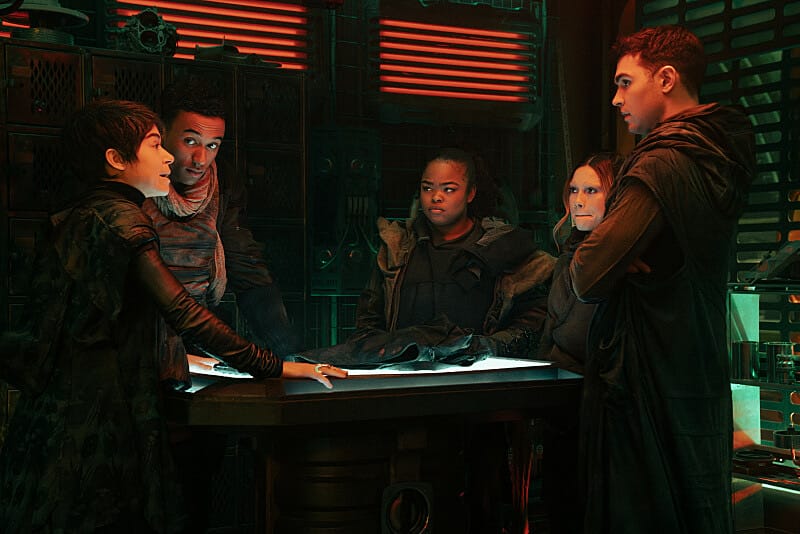
Because that is the other thing this show has done so well. It has built this group into something real. Caleb, SAM, Genesis, and Darem do not go because it is a good idea. They go because they are each other’s people now.
I also have to say, the balance of emotion and humor here is so good.
Darem being drunk on Klingon bonding drink and vomiting glitter should not work as well as it does, and yet it absolutely does. It is weird, funny, and perfectly timed. Moments like that let the episode breathe without undercutting the stakes.
Then we get to Ukeck, and Caleb’s reunion with Anisha is just as messy and emotional as it should be. There is fear first. Survival first. Suspicion first. Then recognition. Then relief. Then all of the pain that comes with finding someone you thought you had lost.
I am glad the episode did not make that easy.
Because getting someone back does not erase what was lost. It does not erase the years or the pain. This story understands that, and it is better for it.
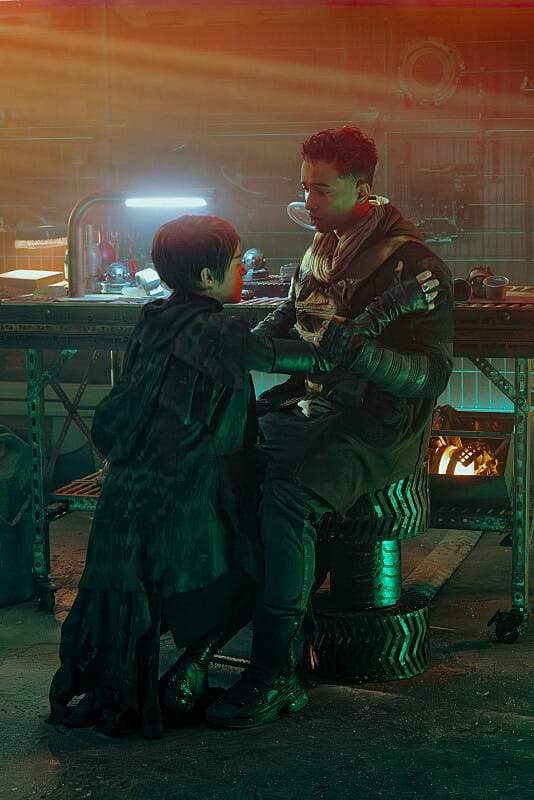
Anisha is one of the most interesting parts of the hour because she carries so much complexity. She took Braka’s deal, but not because she became his true believer. She took it because she was desperate. Because she wanted to live. Because she wanted a chance, however small, to get back to her son someday. The episode lets survival stay messy, and that makes it feel more honest.
Then the Athena arrives, and wow, what a moment.
Ake bringing the ship down into the atmosphere because there is no better option left is exactly the kind of bold command choice that makes Star Trek sing. It is dramatic, risky, and earned. And yes, when SAM says, “This is a flex,” it is one of those lines that made me smile right in the middle of the tension.
But the episode is not interested in easy victories.
The rescue is not the end.
The reunion is not peace.
The escape is not safety.
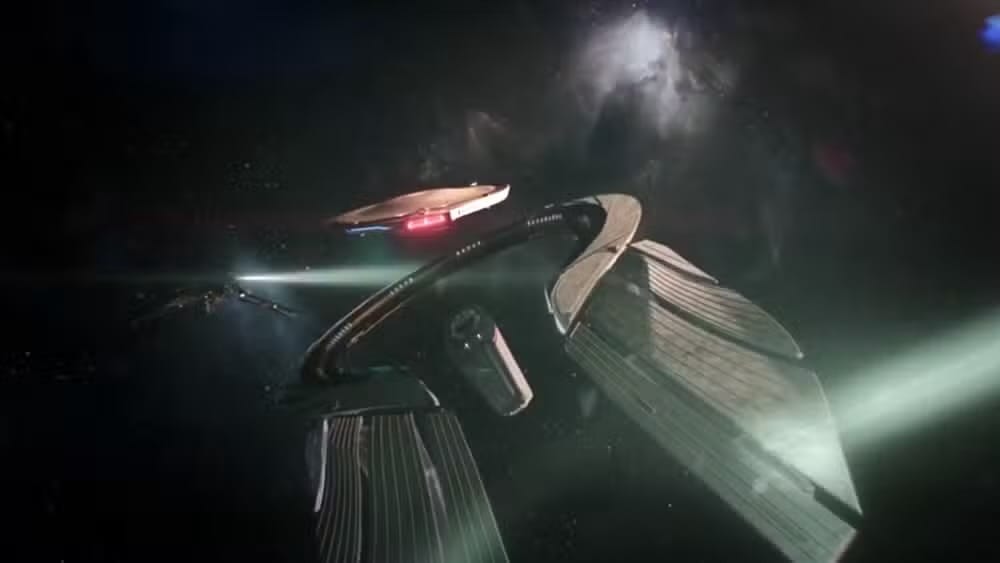
Instead, everything opens up wider. Saucer separation. Omega mines. A red barrier around Federation space. Suddenly the shape of the season sharpens into focus. Braka is not just attacking. He is building a cage.
And then the final emotional turn in sickbay makes it even more complicated. Caleb has his mother back, but now she is face-to-face with Chancellor Ake, the woman who sentenced her and the woman she connects with being torn away from her son.
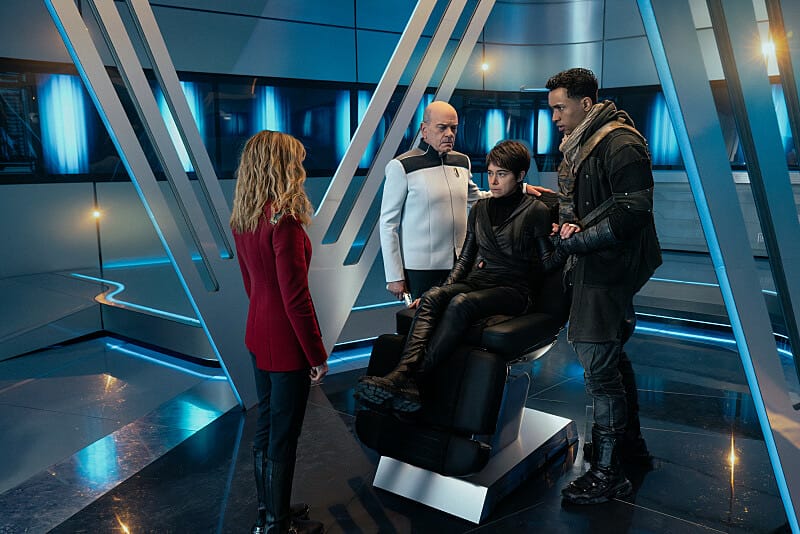
That is not closure.
That is collision.
Chosen family and biological family.
Personal pain and political consequence.
Love and history meeting in the same room.
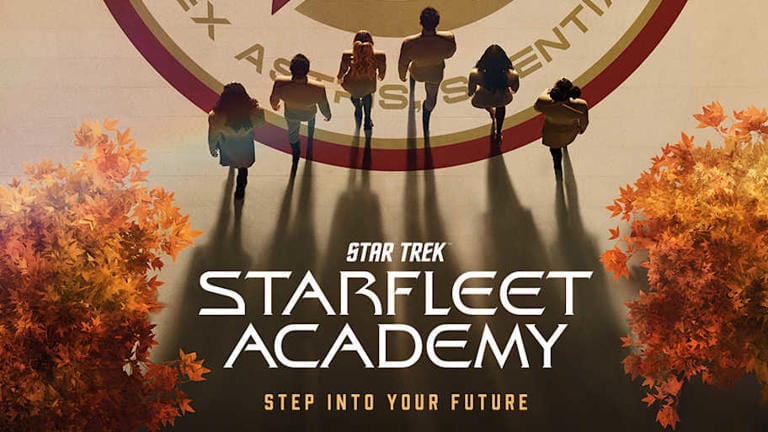
If the opening credits of Starfleet Academy are about the seed being planted and the tree growing and blossoming, then this episode is the bouquet.
This is where so much of what the season has been planting comes into full bloom. Grief. Friendship. Trauma. Healing. Identity. Hope. Chosen family. Biological family. The pain of what has been lost and the beauty of what can still grow anyway.
So yes, I am absolutely giving Starfleet Academy its flowers here.
It earned them.
This is one of those episodes that reminds me why I love Star Trek. At its best, it does more than entertain. It reaches us. It leaves us carrying something after the credits roll.
There are episodes we enjoy, and then there are episodes we remember.
This is one we are going to remember.
Some episodes move the story forward. The special ones leave their mark.
✨Until next time, lovelies, keep jibber jabbering about the stories that move you.