I Was Always Here
An old family photograph captures a version of me who seems both familiar and distant, raising questions about identity, memory, and who we were becoming all along.

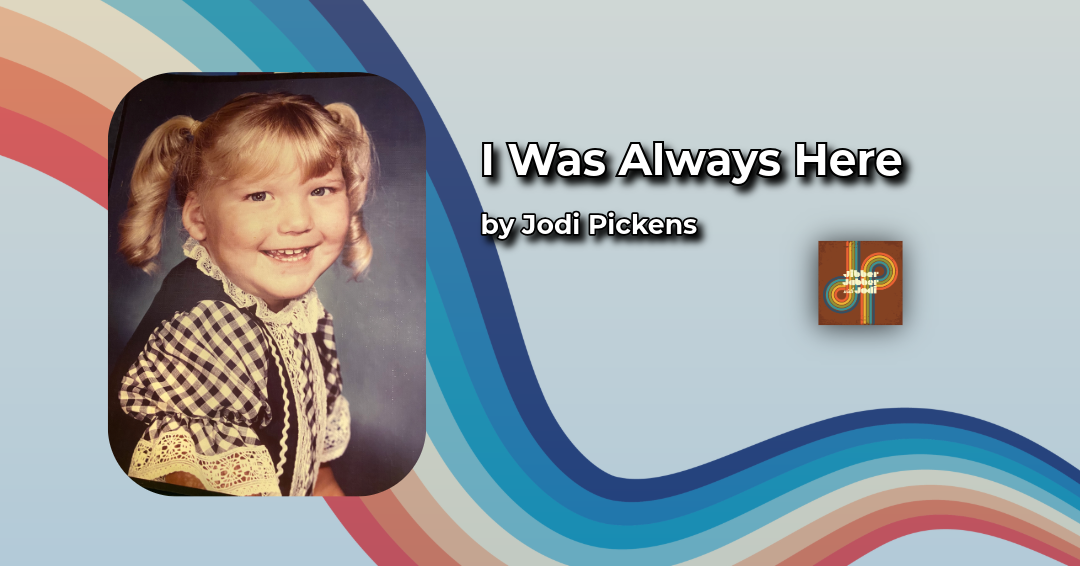
Every once in a while I stumble across an old family photograph and find myself laughing.
Not because the picture is particularly funny, but because it captures a version of me that seems both completely familiar and completely out of place at the same time.
In one of my favorites, I’m somewhere around seven or eight years old, standing awkwardly in a dress that I clearly did not choose and almost certainly did not enjoy wearing. The smile is there because someone told me to smile. The pose is there because someone told me where to stand. Everything looks perfectly normal.
And yet when I look at that photograph now, what I remember most is how uncomfortable I felt. Not miserable. Not rebellious. Just uncomfortable in a way I couldn’t quite explain.
Like I had wandered into somebody else’s story and been handed a costume for a role that didn’t fit.
Looking back now, I can see that I was telling people who I was long before I had the words to explain it.
I was what people called a tomboy. Back then, that label covered a lot of territory. I preferred t-shirts and jeans to dresses. I’d rather spend the afternoon climbing trees, playing sports, riding bikes, or helping my dad work on cars than doing most of the things people expected girls my age to enjoy.
If it involved a bicycle, a ball, a tree to climb, or a car that needed tinkering with, I was interested.
If it involved a dress, a doll, or someone else’s idea of who I was supposed to be, probably not.
The remarkable thing is that my parents never made me feel like there was anything wrong with that. Looking back, I realize what a gift that was.
My parents weren’t making some grand statement about identity. They weren’t trying to challenge social norms. They were simply letting their kid be their kid.
They let me climb trees. They let me play sports. They let me spend hours talking cars with my dad. Most importantly, they let me feel comfortable being myself, even when none of us fully understood what that might eventually mean.
The world outside our home wasn’t always so flexible.
I grew up in a small town in Indiana during the 1970s and 1980s, and like many small towns, it operated on a set of unspoken understandings. Everybody seemed to know everybody. People knew which church you attended, who your parents were, and what family you belonged to. News traveled fast, opinions traveled faster, and standing out was generally viewed as something to be corrected rather than celebrated.
I don’t say that with bitterness. It’s simply the reality of the place and time.
Small-town communities can be incredibly supportive. They can also be incredibly observant.
The thing about growing up in that environment is that nobody had to sit you down and explain which differences were acceptable and which ones weren’t. You learned through conversations, through gossip, through the jokes people laughed at, and through the subjects people carefully avoided.
Long before I understood my own identity, I understood that some identities were safer than others.
At the time, I wouldn’t have described it that way. I was too busy being a kid to analyze the world around me. I was climbing trees, playing ball, hanging out with friends, and trying to figure out where I fit in like every other young person.
But eventually the world starts asking questions about who you’re going to become, and sometimes those questions reveal things about us before we’re ready to understand them ourselves.
There is one conversation from my early teenage years that has stayed with me for decades.
I don’t remember where we were. I don’t remember what prompted it. I don’t remember much of the conversation surrounding it.
What I remember is one sentence.
A relative confidently informed me that one day I would want to wear makeup and be interested in boys.
Like many adults do, she was describing my future as though it had already been decided. One day this. One day that. One day I’d arrive at the version of womanhood everyone expected.
And before I had time to think about it, I answered:
“No, I won’t.”
What fascinates me about that moment all these years later isn’t the answer itself. It’s how quickly it came.
There wasn’t confusion. There wasn’t hesitation. There was certainty.
I wasn’t trying to make a statement. I wasn’t trying to be difficult. I was simply telling the truth as I understood it.
The funny thing is that I didn’t know anything about LGBTQ+ history at that age. I didn’t know there were communities of people whose experiences mirrored my own. I didn’t know the language that would eventually help me understand myself.
What I knew was that everyone around me seemed to be reading from a script I had somehow misplaced.
Life doesn’t always work the way we expect. Sometimes we understand ourselves long before we understand why.
Being a teenager in the 1980s was a gift in some ways.
Fashion was finally working in my favor. Jeans, t-shirts, polos, tennis shoes, and penny loafers fit me just fine. My inner non-femme lesbian was perfectly comfortable in the clothes she wore long before she had the vocabulary to explain herself.
The clothes were easy. The blending in was harder.
I spent plenty of evenings at church youth activities because that’s what everyone did. Looking back, I can still picture some of those rooms: folding chairs, church basements, conversations before and after the official lesson, and the feeling of trying to look relaxed while quietly taking stock of who was there and what was being said.
Sometimes it was a joke. Sometimes it was a casual comment. Sometimes it was a lesson about sin and morality that left me wondering how much of what I was hearing was supposed to apply to me. The details changed, but the message rarely did.
I learned quickly which classmates felt safe and which ones didn’t. I learned who regularly used slurs for gay people, women, and people of color. I learned who laughed. I learned who looked uncomfortable.
Before I ever learned to drive, I learned how to read a room.
I learned to notice who was talking, who was laughing, and who was staying quiet. Eventually, I realized I was doing the same thing.
Staying quiet.
Not because I was ashamed, but because I was paying attention. I wasn’t hiding from myself. I was protecting myself from reactions I wasn’t prepared to navigate.
Looking back now, I sometimes think my independent spirit was strengthened during those years. Partly because independence was already part of who I was, but partly because surviving adolescence required it.
When you spend enough years feeling different from the people around you, you learn how to trust yourself even when nobody around you seems to understand what you’re experiencing. You learn how to stand on your own. You learn how to keep parts of yourself protected while you figure out what those parts mean.
I wouldn’t wish some of those experiences on anyone, but I also can’t deny that they shaped me. They taught me resilience. They taught me observation. They taught me that there is a difference between being alone and knowing yourself.
Maybe that’s one of the reasons that photograph has stayed with me all these years.
Every time I come across it, I’m reminded of how early all of this began. Not the understanding itself. That would take years. Not the language. That would take even longer. But the person I would eventually become was already there, standing in that photograph wearing a dress she hated and smiling because someone told her to smile.
As I’ve gotten older, I’ve come to realize that this story isn’t really about discovering who I was. It’s about recognizing who I was. Discovery suggests that something wasn’t there before. Recognition acknowledges that it was there all along.
These days my life looks very different from what many people probably imagined all those years ago.
If someone had shown that teenager a glimpse of the future, I’m not entirely sure what would have surprised her most. Maybe it would have been that music would remain such a constant companion throughout my life, something I would still be creating decades later. Maybe it would have been spending part of my life talking about Star Trek on a podcast. Maybe it would have been finding communities filled with people who celebrate differences instead of fearing them.
Or maybe it would have been something much simpler.
Maybe she would have been surprised by how little time I spend worrying about fitting in these days.
I’ve built a life with the woman I love. I’ve found friendships rooted in authenticity instead of performance. I’ve discovered that kindness matters, that community matters, and that most people are carrying their own stories of not quite fitting in somewhere.
When I was younger, I thought belonging was something I had to earn. I thought it was something that happened after you became the right person, said the right things, or fit into the right group.
Age has a funny way of correcting those assumptions.
These days, when people ask what Pride means to me, I find myself thinking less about celebrations and more about that photograph.
I think about a little girl who felt uncomfortable in a dress but couldn’t explain why.
I think about a teenager who answered “No, I won’t” before she even understood the significance of what she was saying.
I think about the girl who felt perfectly comfortable in jeans and tennis shoes but never quite figured out how to feel comfortable inside the expectations everyone else seemed to understand. I think about church youth nights, skipped dances, and all the quiet calculations that came with growing up different in a place where different wasn’t always welcomed.
And I realize there was never anything wrong with any of those versions of me.
These days, when I find that photograph tucked between old family pictures, I smile a little differently than I used to.
Not because I wish I could change that kid.
Quite the opposite.
I want to tell her she’s doing just fine.
I want to tell her that one day she will build a life she loves, surround herself with people who know her completely, and spend far less time worrying about whether she fits in.
Most of all, I want to tell her something that took me years to understand myself.
She belonged the whole time.
The girl in the photograph didn’t know that yet.
But she would.
Remember…
✨Be Kind. Do More Good. We Got This.
💫Until next time, lovelies, keep jibber jabbering about the stories and things that move you.