The Burden of Command: When “The Needs of the Many” Turn Personal

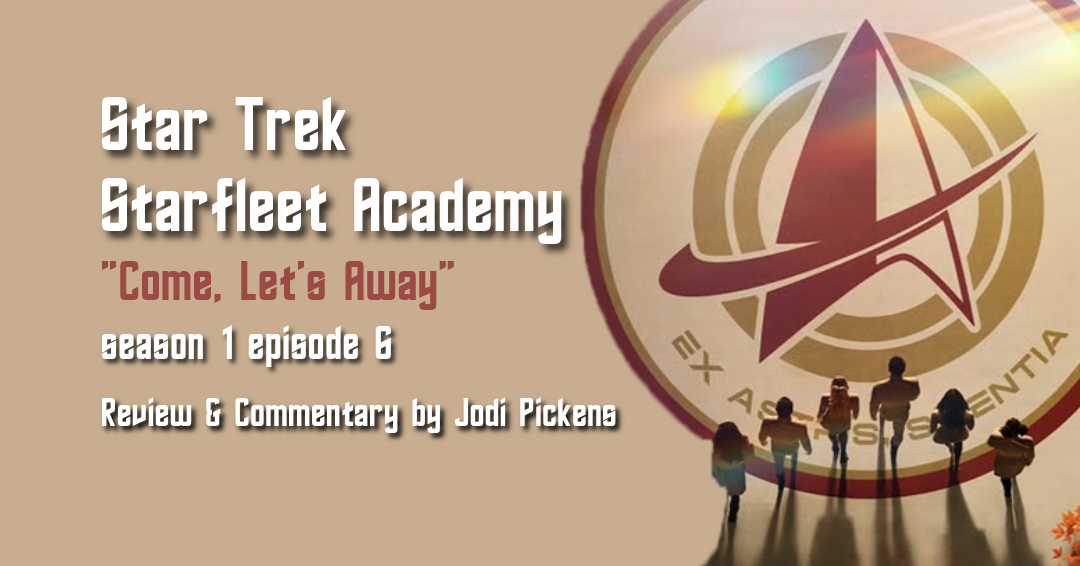
There are Starfleet episodes that test cadets. And then there are episodes that test command. “Come, Let’s Away” is the latter.
From the first crisis beat to the final message from Nus Braka, this hour lives in the shadow of Spock’s famous truth: the needs of the many outweigh the needs of the few. It’s one of those lines that feels steady and immovable, like a pillar Starfleet built itself around. Logical. Noble. Reassuring.
But “Come, Let’s Away” argues something harder. Leadership isn’t about knowing the right answer. It’s about surviving the weight of the answer you choose.
Because philosophy is clean. Leadership isn’t.
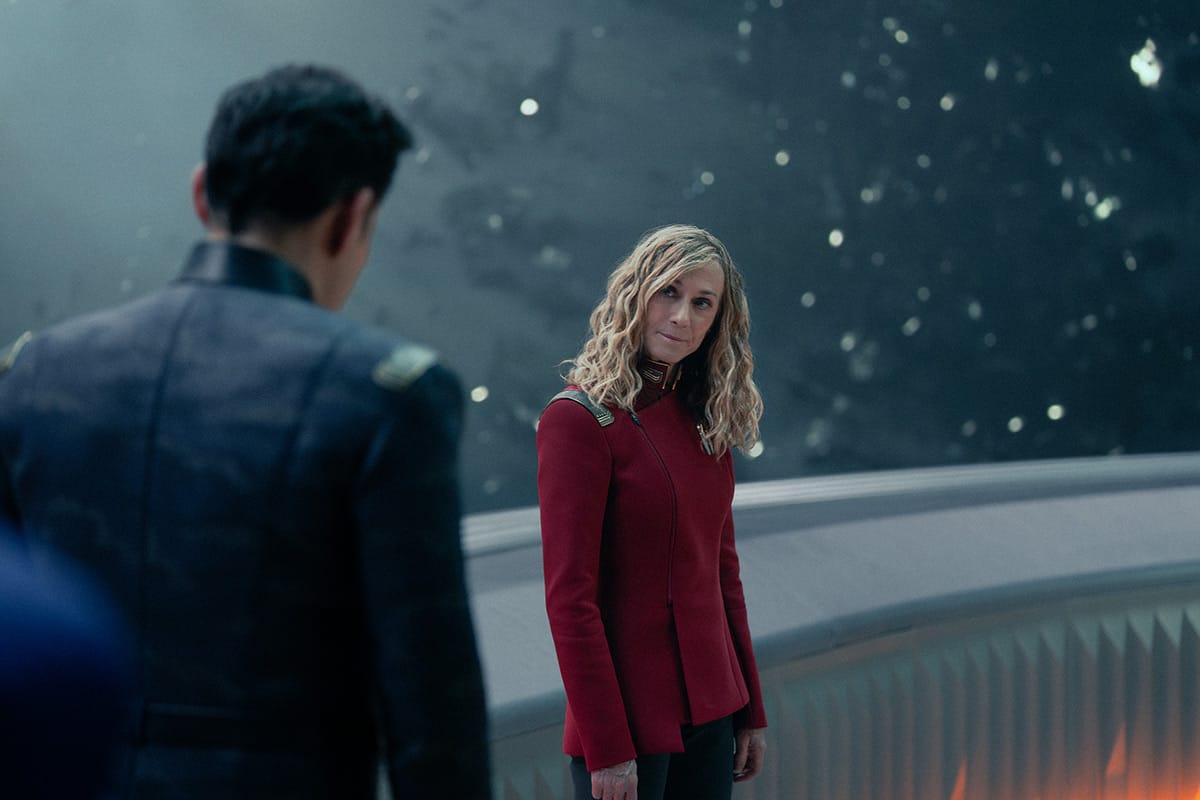
Chancellor Ake becomes the emotional center of this story not because she makes the loudest moves, but because we watch the cost of every decision land on her in real time. She begins the episode composed, addressing cadets who are rebuilding in a galaxy that hasn’t been kind to the Federation. There’s pride in her voice, but there’s caution too. These officers don’t inherit confidence. They have to build it.
And then the drill turns real.
The Furies seize the Miyazaki. The cadets are trapped. Five hours to pay ransom or they die. In that moment, Spock’s line stops being a philosophical North Star and becomes an equation with lives attached. And for Ake, it’s not theoretical. During the Burn, she made a command decision that saved many and cost her son. So when the math shows up again, it isn’t just strategy. It’s memory.
Pay the ransom and risk empowering future violence. Refuse and risk immediate loss. Bring in Nus Braka, a known manipulator, because he might have the one tool that gives you leverage. Every option carries danger. Every path carries consequence.
What the episode does beautifully is refuse to make Ake cold. She calculates. She listens. She measures risk. But she feels it.
When Commander Tomov’s body is detected drifting in space, the moment is almost quiet. No dramatic cue. Just the screen. The silence on the bridge stretches a fraction too long. Ake watches. Her jaw tightens. Her shoulders square, not in defiance, but in acceptance. She doesn’t look away.
That’s command.
The needs of the many might justify risking the few. But someone still has to witness the few.
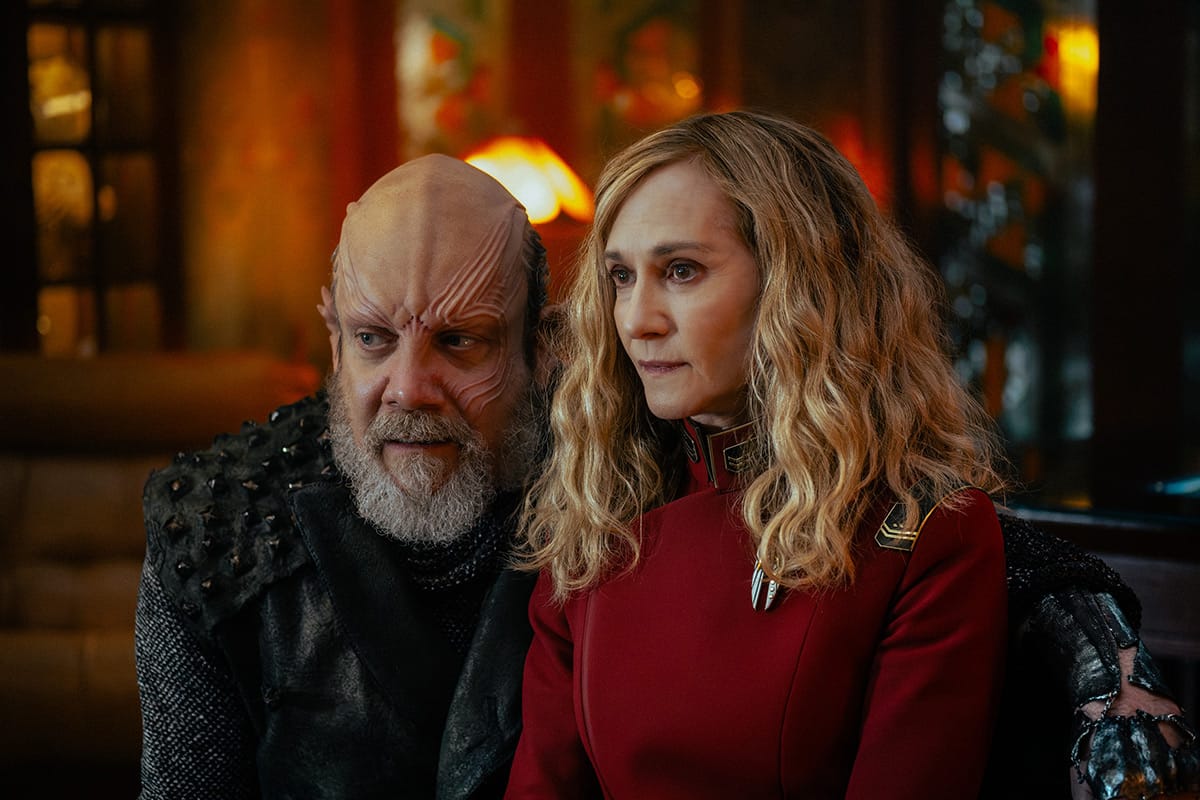
Then comes Braka.
The negotiation aboard the Athena is a study in controlled power. Braka stages the room like theater, placing a chair as if Ake will sit when told. She doesn’t. At least not right away. She lets the silence sit between them. She studies him before she speaks. And when she finally does, it’s to remind him he has something to lose too.
Here’s where the gamble becomes clear. Ake doesn’t trust Braka because he’s trustworthy. She trusts him because she has to. What she fully trusts is her ability to handle him, to outmaneuver the ego and keep the chaos contained.
That confidence is earned.
And that’s why the betrayal hits so hard.
When the Venari ship disables the Sargasso and the trap springs, it’s not just a failed plan. It’s a direct hit to her judgment. She misread the board. She misjudged the player. And now cadets are still in danger because of it.
You can feel the shift. Not panic. Not collapse. But doubt.
Did I overestimate myself? Did I mistake calculation for control?
Learning to trust yourself again isn’t easy, especially when the misstep happened in public, in command, with lives at stake. And Ake isn’t leading in a stable era. The Federation itself is rebuilding from loss. Confidence is fragile. If she can’t trust her own instincts under fire, what does that mean for an institution trying to trust itself again?
But what defines her isn’t the doubt. It’s the next decision.

She doesn’t freeze. She doesn’t shrink the field. She orders Tarima to push through and warn the cadets to activate the program anyway. Even with the board destabilized, she chooses action.
Trusting yourself again isn’t about pretending you were right. It’s about refusing to let fear make the next choice for you.
That theme echoes in Tarima’s arc. Tarima fears losing control of her power. Years ago, she hurt someone she loved. Now she’s being asked to open herself up again, knowing what she’s capable of when emotion spikes.
Tarima fears her own power.
Ake fears the consequences of hers.
Both women are asked to step forward anyway.
And while Spock’s philosophy hovers over the hour, the episode smartly complicates it. Tomov sacrifices himself so the cadets can escape. B’Avi steps in front of a shot meant for Caleb. These are not abstract “few.” They are hopeful, flawed, brave individuals. When Kyle leaves that comic behind as tribute, it’s a quiet reminder that belief in the future is personal.
The needs of the many may justify the mission. But the loss of even one believer still hurts.
Then comes Braka’s final message. Cold. Intimate. He tells Ake he sees her. He calls the trauma loop his gift. He promises he isn’t finished.
And the galaxy doesn’t pause for her to process it. The president calls an emergency Security Council meeting. Station A19 has fallen. The Federation is under pressure again.
Ake has to brace for the next burden of command, because it’s already on its way.
Spock’s line has always sounded like clarity. The needs of the many outweigh the needs of the few. But “Come, Let’s Away” reminds us that clarity doesn’t cancel grief. It just gives grief a reason it can’t argue with.
The problem is, someone still has to do the choosing. Someone still has to watch the screen when a body drifts past. Someone still has to walk into the next meeting and not let their voice shake.
That’s what this episode says about command. It isn’t the quote. It’s the weight behind the quote.
And Ake carries it anyway.