Why Star Trek Still Matters

Star Trek does not just imagine a better future. It challenges us to build one.
I think that is one of the biggest reasons it has lasted for nearly sixty years. Not because every series is perfect. Not because every episode works for every fan. And definitely not because Trek fans have ever agreed on all that much. We have not. We never will. That is part of the fun.
Star Trek endures because it still believes in humanity, even when humanity makes that belief difficult.
That has always been the difference for me. Trek does not just ask us to look at the future and admire it from a safe distance. It asks us to think about what it would take to deserve that future. It asks us to believe that people can grow, that curiosity matters, that community is worth the effort, and that compassion is not weakness. It is strength. Real strength. The kind that holds when things get hard.
That is the heart of Trek.
Underneath the ships, the stars, the strange new worlds, and yes, all the wonderful technobabble, Star Trek has always been making a larger argument. A better future is possible, but it does not just appear on its own. We build it through what we value. Through how we treat each other. Through whether we meet difference with fear or curiosity.
Not perfect. Better.
That distinction matters. Honestly, it may matter now more than ever. In a culture that so often confuses cynicism with intelligence, Star Trek still dares to be sincere. It still insists that hope is not foolish. It is necessary.
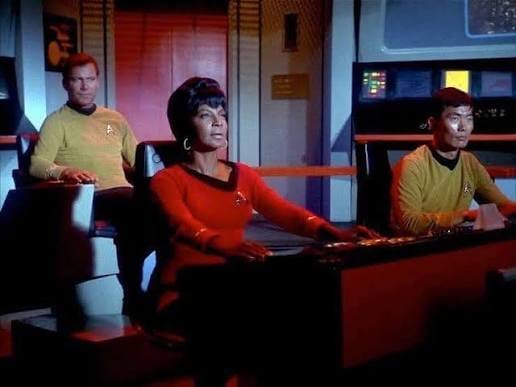
From the beginning, that set Trek apart. The bridge of the Enterprise did not just show us technology. It showed us possibility. Uhura mattered because she stood in that future with intelligence, authority, and complete presence. Sulu mattered because he was there too, steady and capable, part of a future that looked wider and wiser than the world many viewers were used to seeing on screen. And Spock, maybe more than anyone, showed us something Trek has never stopped trying to say. Difference is not a flaw. It is often where understanding begins.
That idea runs through all of Star Trek. Diversity is not a side note in Trek. It is one of the franchise’s deepest convictions. The future works because people do not all think the same, come from the same place, or move through the world in the same way. They bring different histories, instincts, losses, and strengths, and somehow they build something together anyway.
That is the dream. Not sameness. Shared purpose.
And Trek is smart enough to know that dream gets tested.
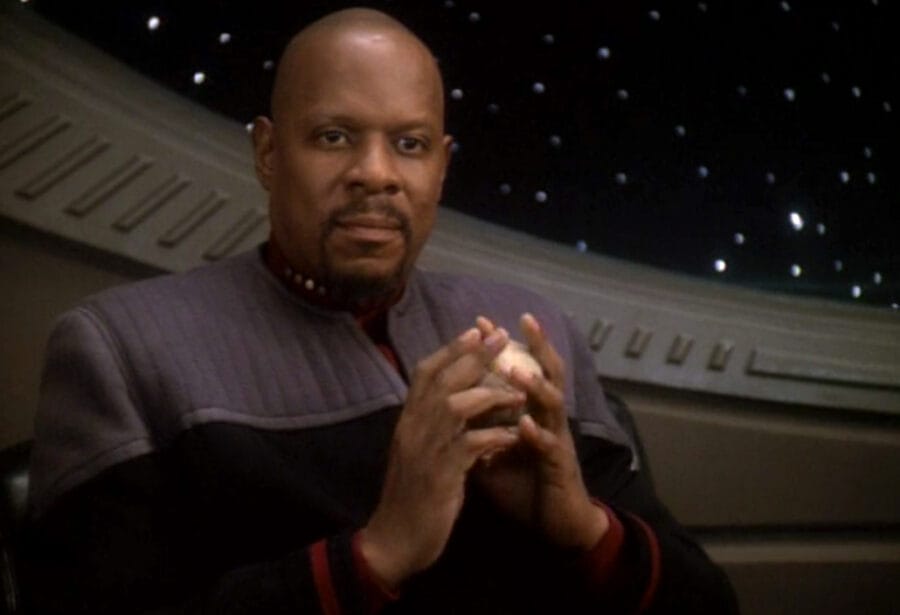
That is why these characters still matter. Sisko matters because he shows us that hope is not naive. It is a choice made under pressure. He carries grief, duty, faith, anger, and history all at once, and Deep Space Nine never asks him to be easy or uncomplicated. Janeway matters because she keeps asking one of the most important Trek questions of all. Not just what gets us through this, but what kind of people we become in the process. Seven matters because her story is not really about becoming more acceptable. It is about reclaiming identity, dignity, and selfhood on her own terms.
That is Trek at its best. It does not just praise ideals. It tests them.
It asks what compassion looks like when someone is difficult to understand. It asks what community means when people are wounded, stubborn, grieving, or afraid. It asks whether our principles still matter when holding onto them actually costs us something.
That is the test, isn’t it?
Not whether we can imagine a better future when everything is easy, but whether we still believe in one when it is not.
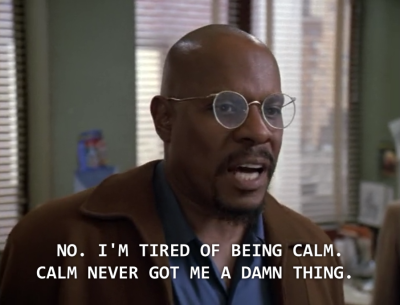
That is why episodes like “The Measure of a Man” still hit so hard. Data’s fight for personhood is not only about Data. It is about whether the future Trek imagines will really honor the dignity it claims to value. “Duet” pushes even harder, forcing us to sit with guilt, accountability, and the damage violence leaves behind. “The Inner Light” reminds us that memory and empathy are not small things. They are sacred things. And “Far Beyond the Stars” remains one of the most important hours Star Trek has ever produced because it refuses to let us celebrate a hopeful future without confronting the painful history that made such a future necessary in the first place.
That is not shallow optimism. It is earned optimism.
Star Trek knows who we have been. It knows what prejudice, cruelty, exclusion, and fear can do. It has never really looked away from that. But it also refuses to believe those failures are the final word. That may be the boldest thing about it.
Trek does not ask us to worship the future. It asks us to deserve it
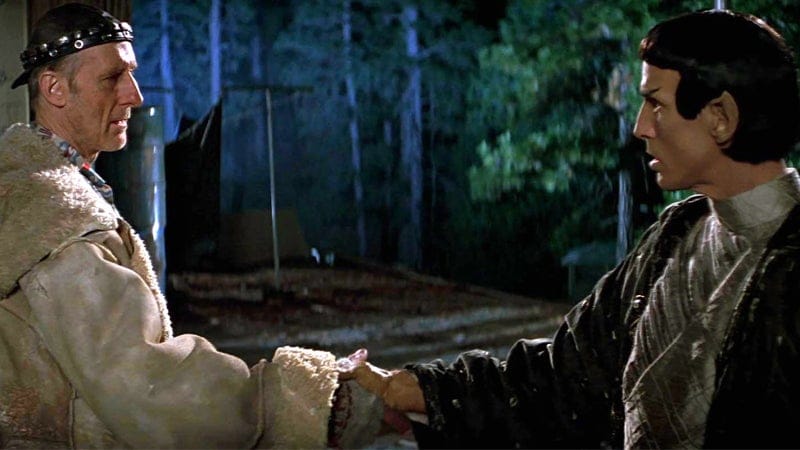
The films understand that too. The Wrath of Khan endures because its sacrifice is rooted in love, friendship, and purpose. First Contact matters because it reminds us that humanity’s better future was never guaranteed. It had to be chosen. Protected. Built. It still does.
And that is why Star Trek continues to resonate across generations, even when the style shifts and even when fans debate, as fans always will, about which version feels most like Trek. Underneath all of that, the deeper current remains. You can see it in Saru, whose gentleness and wisdom make the case that sensitivity can be a form of strength. You can see it in Sylvia Tilly, whose awkwardness, heart, and determination remind us that heroism does not have to look polished to be real. You can see it in Raffi Musiker and Beckett Mariner, both of them messy and funny and wounded in very different ways. Together, they prove that Trek still understands an essential truth. People do not have to be perfect to matter.
And really, that has always been one of Trek’s quiet strengths. It makes room.
For the outsider. For the overachiever. For the skeptic. For the rule-breaker. For the person trying to come back from grief, addiction, isolation, or shame. For the one who does not quite fit yet. That is part of why characters like Worf, Riker, Quark, Jadzia, and others stay with people too. Some embody honor. Some embody joy. Some embody contradiction. All of them help make the universe feel inhabited rather than idealized.
Because community is not built out of perfect people. It is built out of imperfect people who decide that living, working, and growing together is worth the effort.
That, to me, is the philosophy of Trek in one sentence.
Hope is the emotional core. Curiosity is the method. Community is the structure. Compassion is the ethic. Put them together and you get the future Star Trek has been pointing toward all along. Not a fantasy of perfection, but a vision of moral progress. A future where knowledge matters, service matters, dignity matters, and difference is not treated as danger.
That vision still has power because it still feels necessary.
At a time when so much storytelling is built around collapse, Star Trek still insists on construction. It still believes better is possible. Not automatic. Not easy. But possible. And that lands differently than nostalgia alone ever could.
Because this is not really about looking back and saying remember when Trek was good, or remember when hope felt easier. It is about recognizing that the core of Trek still challenges us. It still asks who belongs in the future. It still asks what we owe one another. It still asks whether we are brave enough to imagine a society shaped by curiosity, community, and compassion instead of fear.
That is why Star Trek still matters.
Not because it gives us an escape hatch from the world as it is. Because it keeps offering a vision of what the world could become if we chose better on purpose.
So yes, go back. Rewatch the original series. Revisit The Next Generation, Deep Space Nine, Voyager, and everything that followed. Re-read the books, the essays, the interviews, the histories. Spend time again with the characters who shaped your understanding of leadership, friendship, sacrifice, and belonging. Return to the stories that moved you, and maybe give another chance to the ones that did not connect the first time.
Not because you have to. And not just because nostalgia is powerful, though of course it is.
Do it because Star Trek is still asking the right questions.
About personhood. About responsibility. About who gets seen. About what we build when we decide that empathy matters as much as power.
That is the invitation Trek keeps extending, sixty years in. Not just to admire a brighter future, but to take it seriously. To see it as something more than fiction. To understand that the final frontier is not only out there among the stars. It is also here, in the daily work of becoming wiser, kinder, and more expansive than we are right now.
That is why Star Trek still matters.
Because it does not just show us the future.
It asks whether we are willing to become the kind of people who could live in it.
Remeber…
✨Be Kind. Do More Good. We Got This.
💫Until next time, lovelies, keep jibber jabbering about the stories that move you.